07Article · AI Short Drama Blocking
Character Blocking in AI Short Drama
Blocking is not where actors stand. It is three things: which way the body faces, where the person stands, and how they move. Five facings, three rules of position, three paths of movement — with prompt lines to use.
01 / Facing
Facing: the body speaks before the lines do
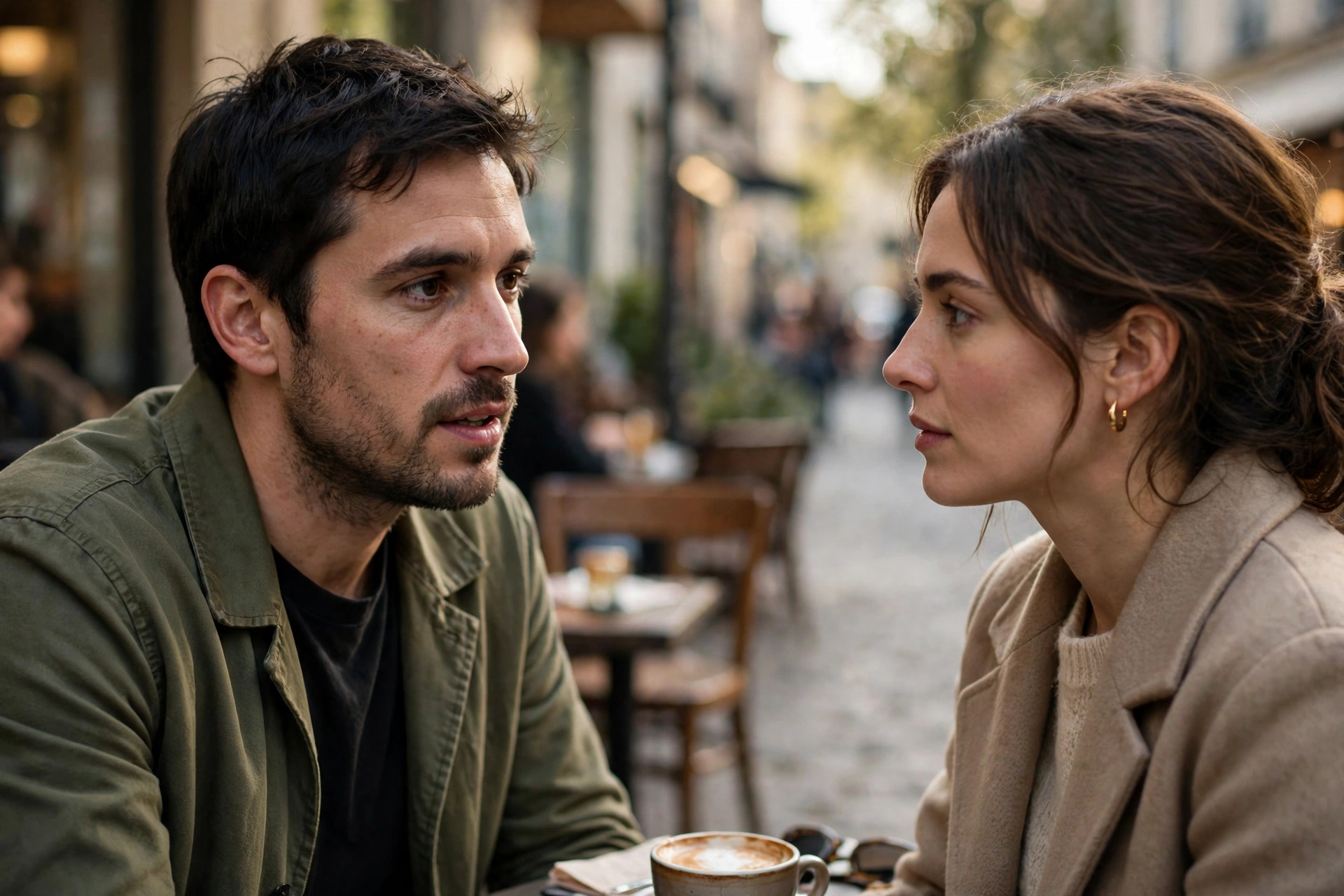
Which way a character turns in a scene is the first thing the viewer reads. Blocking starts with facing: which way the body points is who the character opens up to, and who they hold back from. There are only five facings, and one wrong choice changes the feel of the whole scene.
Full front: the whole person faces the camera, nothing held back. Use it for statements, standoffs, confessions — lines that have to be said straight to the viewer, with nowhere to hide. Full front is the strongest facing, and the easiest to overuse: a scene shot all in full front feels like one long speech.
Three-quarter front: the most used facing of all. The body turns slightly, the face still points toward the conversation — natural, with a sense of exchange. Dialogue, everyday scenes, two people talking while they do something: start here by default. When you are unsure of the facing, pick three-quarter front first, then adjust toward either side as the feeling demands.
Profile: only one side of the face is visible, the eyes on the frame's edge or on the other person. Profile is about looking and being looked at: waiting for a reaction, sizing someone up, two people studying each other. One person front-on and one in profile, and the relationship is set without a word.
Three-quarter back: the body has turned halfway away, a little of the face still showing. Something on the mind, a sentence started and pulled back, about to leave — this is that facing. The character is not refusing to speak; they have not decided whether to speak yet, and three-quarter back is exactly that “not yet decided.”
Full back: the whole person turned away from the camera — refusal, loneliness, the unknown. The back itself is the attitude: this scene does not need the face, it needs the sight of someone who will not turn around. Leaving, saying goodbye, one person facing an empty room — the back carries more weight than the front.
How to prompt it: lock the facing in the first line, for example, “The character stays in three-quarter front toward the camera throughout — never turn to full front or back.” Then change only what sits inside the braces: the person, the place, the action. Facing is one of the things that must not change — write it as a fixed rule, not just a passing mention.
Common mistake: two people in a dialogue with mismatched facings — one toward the camera, one away — when nothing in the scene meant it that way, and the viewer assumes one of them is hiding something. The other trap is the wrong facing for the feeling: full front when the scene should hold something back, and the secret leaks at once; full back when the scene should come clean, and the viewer waits for something that never arrives.
02 / Position
Position: where they stand is where the relationship stands
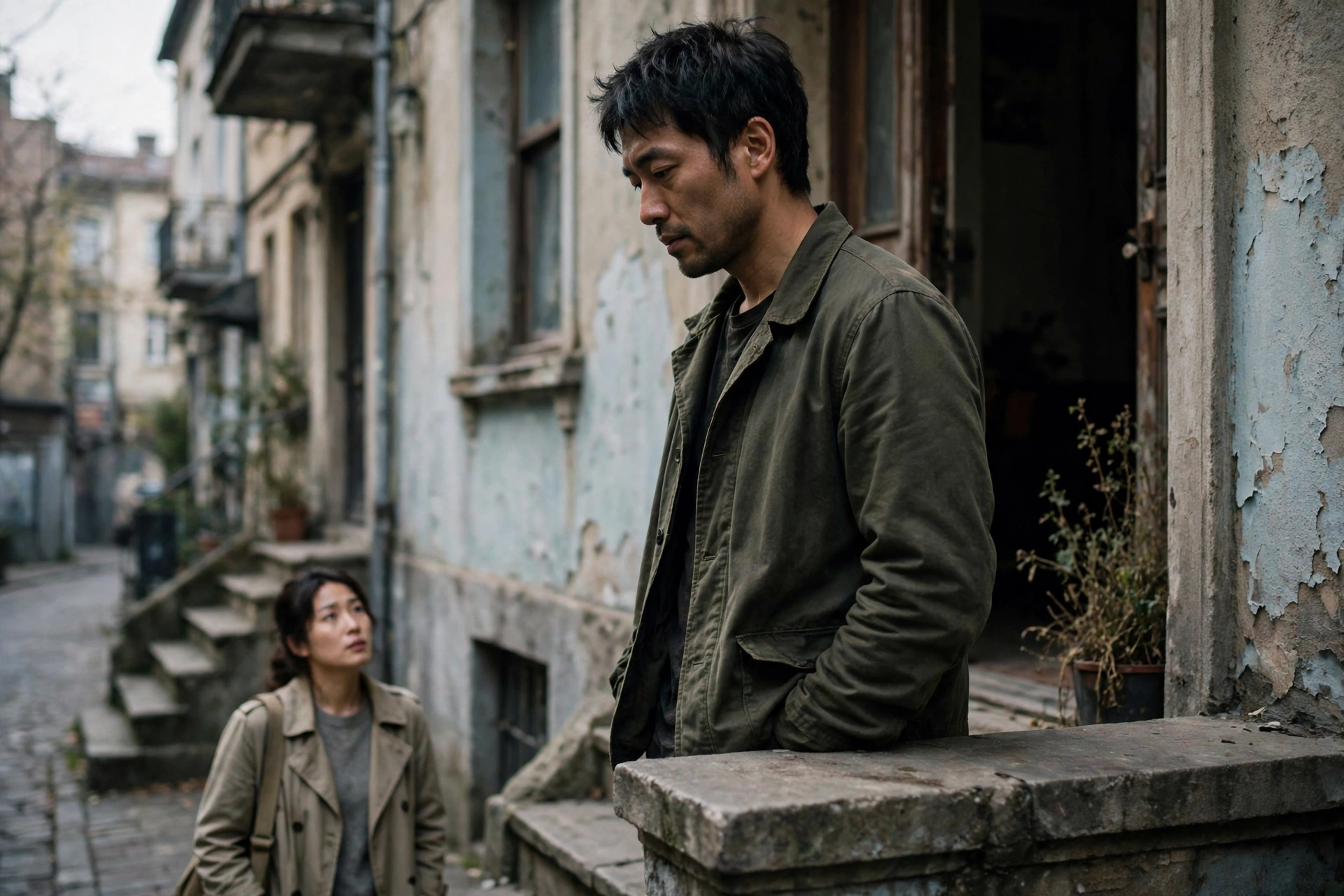
Facing sets the attitude; position sets the relationship. How far apart two people stand, who is higher, who is in the foreground and who is in the background — the viewer understands it in one look. Position has three parts: height, distance, and foreground and background.
Height: standing high or low, standing or sitting, speaks on its own. A standing person talking to a sitting one holds the upper hand by default; two people at the same height are equals. To give a scene pressure, pull the heights apart before adding any lines.
Distance: how near or far two people stand is how near or far the relationship is. Close is intimacy, testing, or confrontation; far is distance, guardedness, or not being ready. One step closer or one step back is a scene in itself — do not leave people standing in place while they read out the lines.
Foreground and background: the person in front frames or blocks the person behind, and the order is set at once. Leave a shoulder or a profile in the foreground of a dialogue scene and the viewer is suddenly inside the room. Leave the foreground empty and the frame leaks — however good the people look, they sit on the background like cut-outs.
Common mistake: AI loves to line people up in a row: always dead centre, always the same height, always the same distance apart — and the relationship goes flat. The other trap is setting the position once and never moving it: a whole scene with the same blocking from start to finish, and no facing can save it. Positions should follow the story — when the relationship changes, the standing should change.
03 / Movement
Movement: how the person moves is how the feeling moves
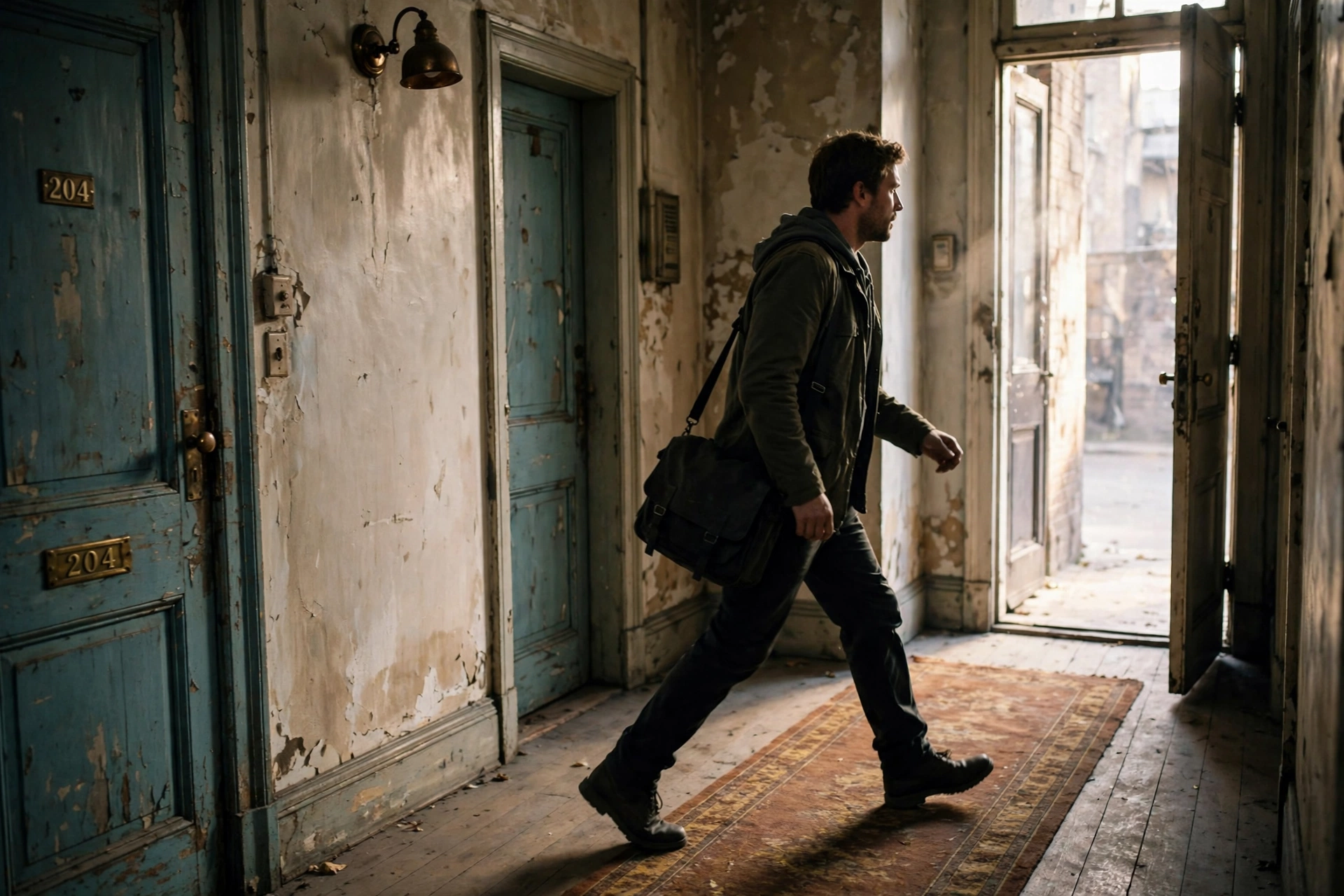
Blocking truly begins when people start moving. There are only three paths: radial, lateral, and diagonal. Which one to use depends on where the feeling of the scene needs to go.
Radial: walking toward the camera, or away from it. Toward is approach, confession, threat; away is leaving, giving up, walking into the unknown. Radial is the most direct path — the change in distance is itself a change in feeling, and the closer the person gets, the stronger the pressure.
Lateral: walking from one side of the frame to the other. Passing through, searching, patrolling — all lateral. It is the steadiest path, and the easiest to leave flat: a person walks left to right, nothing happens, and the viewer drifts. A lateral move needs a pause or a turn — one place for the walk to land on.
Diagonal: crossing the frame at an angle. Chasing, escaping, rushing toward a goal — use the diagonal. It carries the strongest sense of motion and wakes the frame up at once, but get the direction wrong and it falls apart: the character meant to rush for the door and instead walks out of frame, and the viewer loses them.
With the camera: when the person moves, the camera moves too, and the two need to agree. Tracking, panning, pushing in — write the path and the camera move in the same line, and keep the directions from fighting: the person walks right, the camera follows right; the person walks toward the lens, the lens pushes in slowly. Write them in opposite directions and the person and the camera go their separate ways.
Common mistake: writing the path but not the start and the end. “Walk over there” says nothing about from where to where, so the model guesses — differently in every frame — and continuity breaks first. The other trap is changing direction twice in one scene: left, then right, and the viewer who just caught up loses the trail. One scene, one path. That is enough.
04 / All Three Together
All three together: block the people first, then roll camera
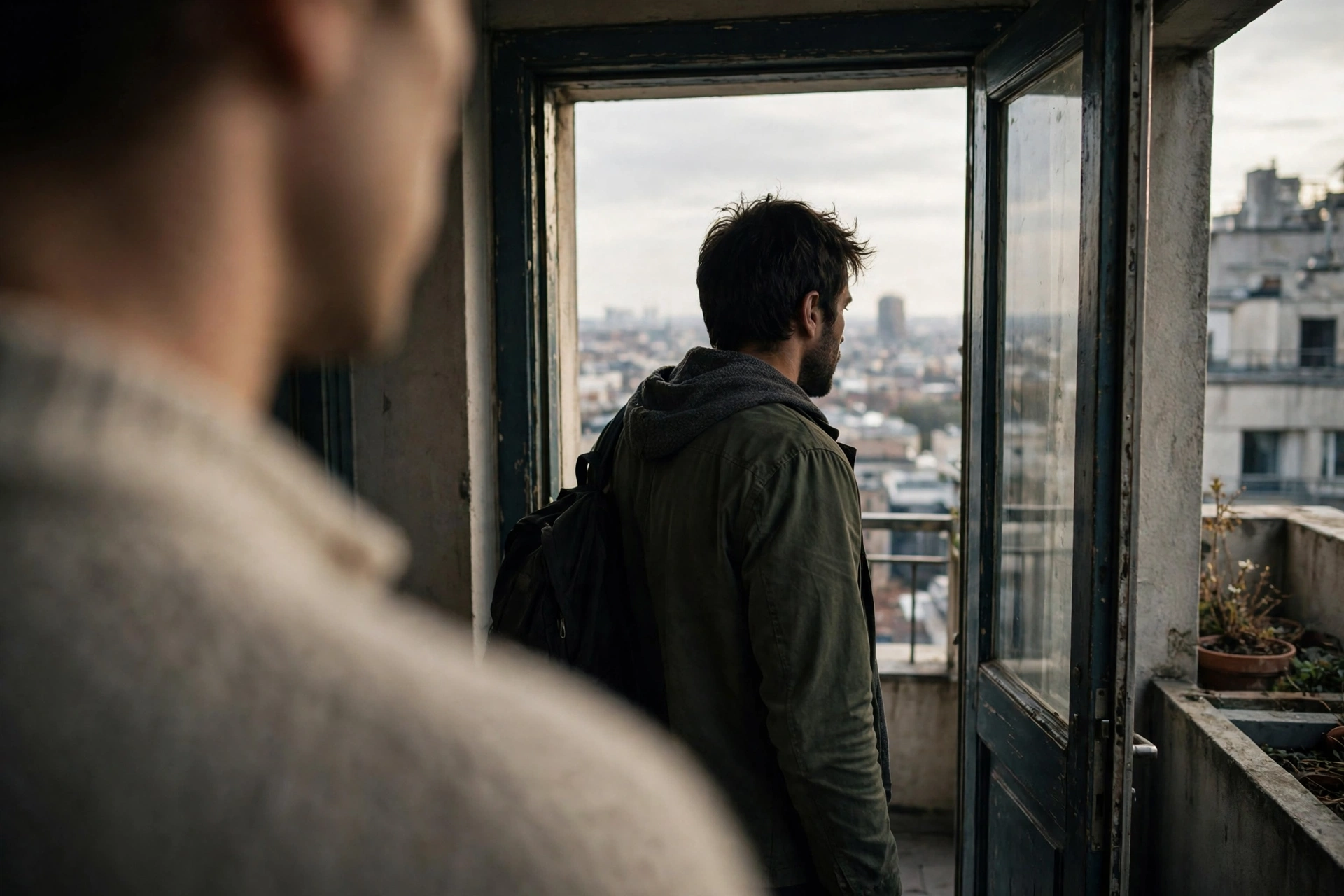
Take one scene — a person about to leave — and run it through all three. Facing first: three-quarter back, holding something back, not yet decided. Then position: standing in the doorway, half a head higher than the person inside the room, a shoulder left in the foreground so the order is set at once. Then the path: a diagonal across the frame toward the door, the camera panning to follow, a half-second stop at the door, then pushing it open. Block all three, then write the prompt.
How to prompt it: give facing, position and path one line each, always in that order: facing first, position second, path last. Then add one fixed rule: the number of people, the costumes, the place — none of them change. One scene solves one thing: a statement takes facing, a relationship takes position, a change of feeling takes the path. Do not push all three at once.
Common mistake: writing the path and forgetting the facing — the person moves, but which way the face points in every frame is left to the model to guess, and continuity breaks first. The other trap is writing more blocking than story: blocking is the means, the scene is the end. Once the people are placed, hand the shot back to the story.
At a Glance
Blocking at a glance: facings and paths
| Move | What it looks like | When to use it |
|---|---|---|
| Full front | Facing the viewer, nothing held back | Statements, standoffs, confessions |
| Three-quarter front | Natural, with a sense of exchange | Dialogue, everyday scenes, the default facing |
| Profile | Looking and being looked at, between two people | Waiting for a reaction, sizing someone up |
| Three-quarter back | Holding something back, something on the mind | About to leave, hiding something, a sentence pulled back |
| Full back | Refusal, loneliness, the unknown | Leaving, goodbyes, the back as the attitude |
| Radial movement | Toward the camera, or away from it | Approach, confession, leaving, walking into the unknown |
| Lateral movement | From one side to the other, the steadiest | Passing through, searching, patrolling — add a pause |
| Diagonal movement | Crossing at an angle, the strongest motion | Chasing, escaping, rushing toward a goal |
FAQ
Frequently asked questions
Is blocking the same as staging the walk?
No. Blocking is the director's language, three things in all: facing, position, and path. The walk is only one of them — where a person goes from and to. Fix only the walk and facing and position are still empty; the frame will not stand up.
What if the AI keeps changing the facing?
Lock the facing in the first line, then add a fixed rule, such as same facing throughout, no turning around. In multi-shot scenes, write the facing at the start of every shot, not just once. One mention is not a lock — the same goes for position and path.
Does one scene need all three?
No. Pick by what the scene has to solve: a statement takes facing, a relationship takes position, a change of feeling takes the path. One scene, one job — that is enough blocking. Push all three at once and the frame gets busy instead.
The Core
The core: blocking is the director's floor plan
Set the facing first — who the character opens up to, who they hold back from. Then the position — who is high, who is near, who is in the foreground. Then the path — wherever the person walks, the feeling walks with them. Block all three before rolling, and the AI knows what to shoot.
Shot size and blocking are two halves of one director's language: size decides how far the camera stands and where it cuts, blocking decides where people face, where they stand, and how they move. The shot-size piece gave cutting formulas for 8 scenes; this one covers the 3 things of blocking. Next is the angle: change the camera position, and the same blocking carries a different feeling.
If you're making an AI short drama or an AI commercial, blocking is one piece of the job. From breaking down the brief and storyboarding to continuity and multi-version delivery, every step needs a director's eye. To talk about your film, add WeChat newwork88 or email 690076050@qq.com.
Shot sizes: how to cut AI short drama → Camera moves: cinematic moves with AI → Drama services → Commercial film services →
Have a project in mind? Let's talk first.
On the brief page, we can start with the type of film, scope, timeline and delivery — get clear first, then start production.