06Article · AI Short Drama Shot Sizes
Shot Sizes in AI Short Drama: One Formula
Shot size is not five names — it is the order they appear in: wide, full, medium, close-up, extreme close-up. Eight everyday scenes, each with its own cutting formula, from entrances to endings.
01 / The Formula
The formula: fix the order first, then shoot
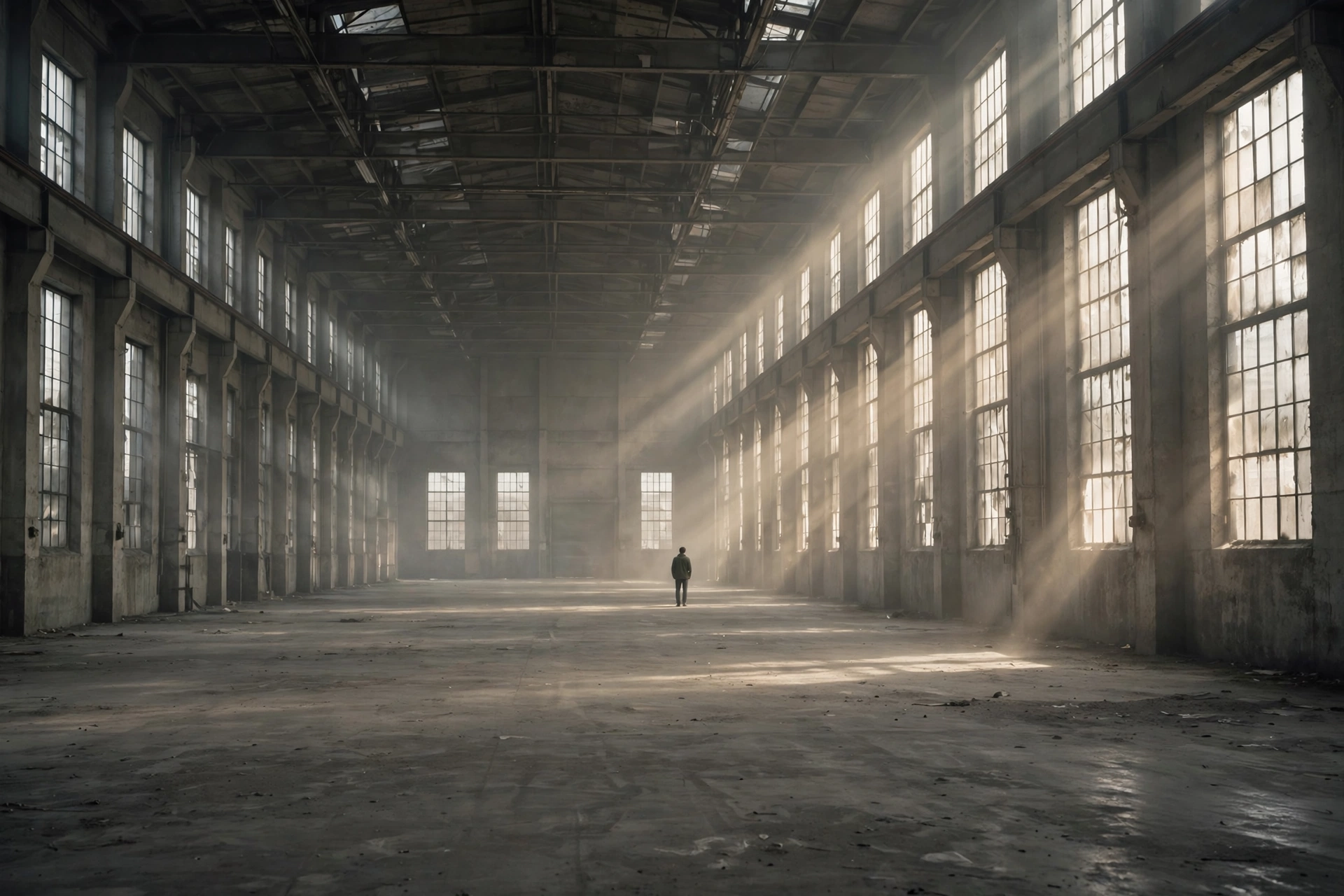
Many AI short dramas feel messy, and the problem is rarely a single bad frame. It is the cutting order. A wide shot cut to an extreme close-up, then back to a full shot, forces the viewer to find their bearings every second — and the emotion breaks. There are only five sizes: wide, full, medium, close-up, extreme close-up. What matters is the order they appear in.
The wide shot sets the space first: scale, mood, a sense of the unknown. The figure can be tiny, or not there at all. The full shot places the person inside that space, showing where they stand and their whole body. The medium shot follows the action, the close-up carries the emotion, and the extreme close-up lands on a single telling detail: a key, a photo, a lock, a keepsake. Run the five from large to small and you get the most used formula of all: wide → full → medium → close-up → extreme close-up.
How to prompt it: lock the order in the first line, then swap the variables. Put the sequence up front — for example, “Strictly use wide → full → medium → close-up → extreme close-up, moving from large to small.” Then change only what sits inside the braces: the place, the character, the goal, the object. Finally, write what must not change as its own fixed rule — no new characters, no costume changes, five shots only. A model treats a stated limit like a hard rule.
Common mistake: opening on an extreme close-up. A scene that starts tight leaves the viewer with no idea where anyone is or who they are with, and no later full shot can rescue it. Large to small is the default order — unless the scene is meant to run backwards. The ending does exactly that, as you will see below.
02 / Entrances, Dialogue and Clues
Entrances, dialogue and clues: place the person, then shoot the relationship
The most used opening is the entrance: a character walks into a strange place. The formula is wide → full → medium → close-up → extreme close-up. Open with the wide shot to set the scale, mood and unknown of the place — the figure can arrive late. Once they appear, the full shot shows where they stand in the space, the medium shot follows their movement, the close-up carries the emotion, and the extreme close-up lands on one key detail: a key, a photo, a lock, a keepsake. Use it for openings, entering a warehouse, walking into a building, arriving somewhere strange, or starting a search.
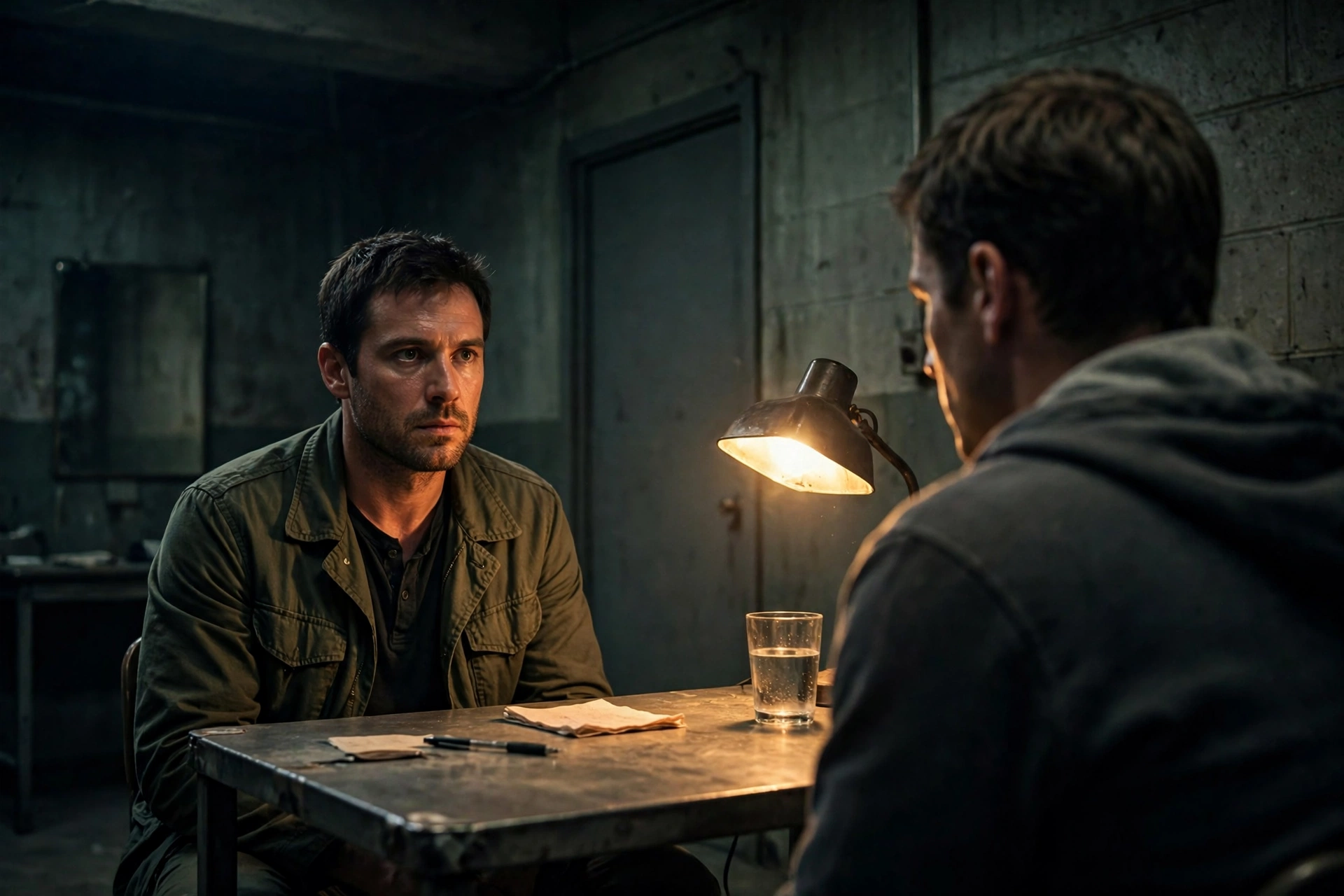
A two-person dialogue runs on a different pattern: two-shot → A close-up → B close-up → A close-up → B close-up → two-shot. The opening two-shot shows the distance, positions and relationship between the two people at once. Then shot and reverse shot take over, catching the face and reaction behind each line. The closing two-shot lets the viewer see where the two stand now — a standoff grown harder, a step closer, or a new distance. Use it for interrogations, talks, fights, confessions, passing a clue, or any scene where a relationship changes.
A clue scene plays by one rule: never hand the answer over. The formula is character close-up → extreme close-up of the key object → full or medium shot. Follow the eyes and the reaction to narrow the focus, then blow up one detail — a slight shake, a stain, a crack, a strange mark, a hidden corner. Only then open the frame back up to show the space, the relationship or the truth that detail belongs to. Do not show the full answer early.
Common mistake: the axis is where dialogue scenes break. Lock the 180-degree line in the prompt: A stays on the left of frame facing right, B stays on the right facing left; in a single close-up, the other person's shoulder or profile must stay at the edge of frame. Lose the axis and the viewer cannot tell who is talking to whom. The other trap is shooting dialogue in close-ups only: six faces in a row, and the viewer never sees the distance and positions between the two people. The relationship disappears. Keep the opening two-shot and the closing two-shot — neither can go.
03 / Decisions, Searches and Fights
Decisions, searches and fights: make the action visible, fast but readable
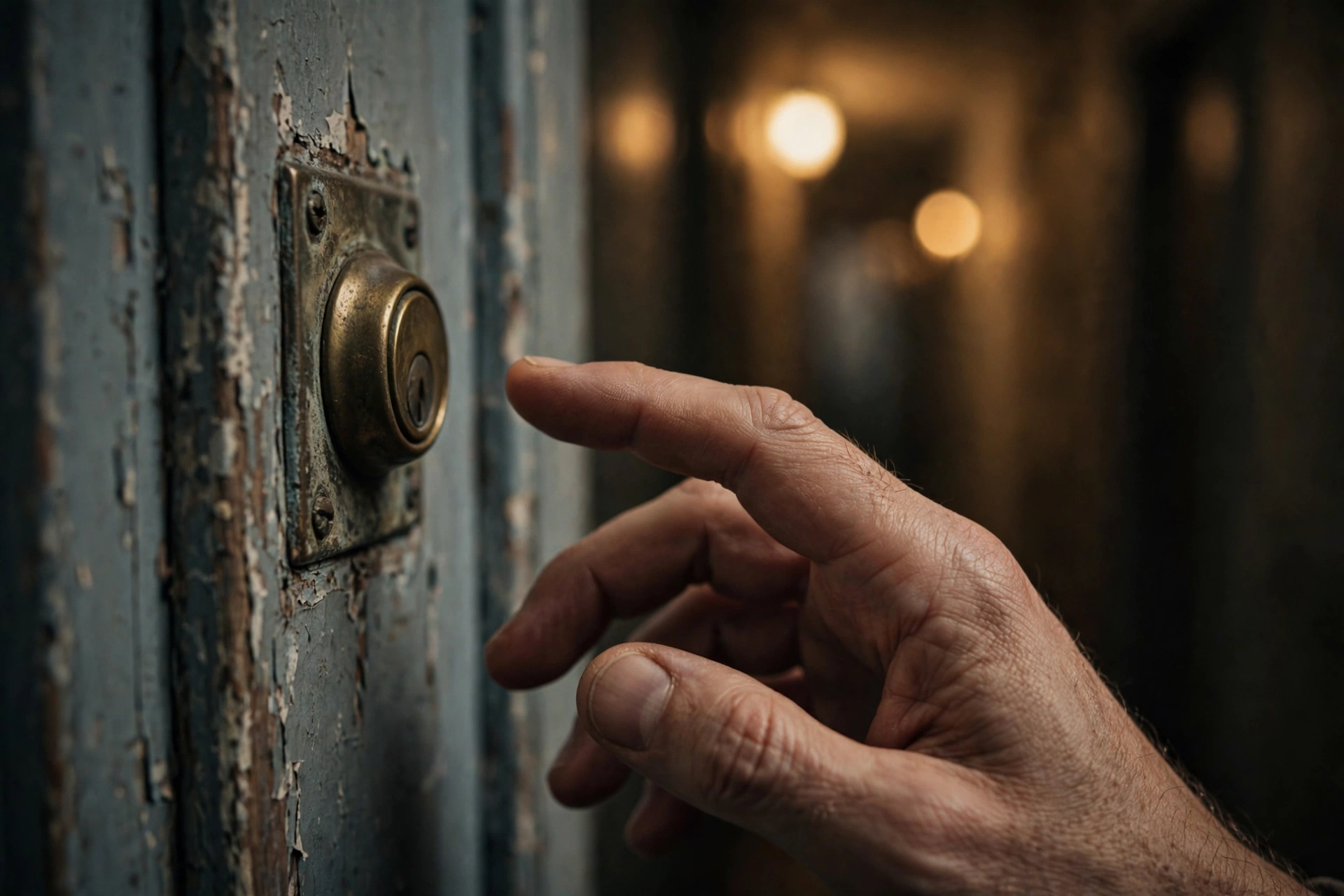
A decision is not a line of dialogue. It is a chain of body changes. The formula is medium → close-up → extreme close-up. The medium shot shows the person stopping, turning, walking toward the goal. The close-up shows only the change in the face — doubt or resolve. The extreme close-up lands on the hand: a button, a keepsake, a signature. Whether the decision holds depends on that action being seen. Use it when a character decides to go in, to leave, to make the call, to sign the paper, to pick up a weapon, or to finally tell the truth.
A solo search runs the other way: large to small, then back. The formula is full → medium → extreme close-up → close-up. First set the range: the full shot shows the area the character can move in. The medium shot follows them step by step as they search. The extreme close-up gives the one wrong detail. Then cut back to the character's close-up to show what that detail did to them. Space and suspense, carried on one line. Use it for searching a room, crossing a corridor, checking a suspicious object, entering a basement, or tracking a strange sound.
A fight is most afraid of being fast and unreadable. The formula is full → medium → close-up → extreme close-up → full. The opening full shot sets out who is fighting whom, where each stands, and which way the danger comes from. The medium shot shows the attack and defence clearly. The close-up takes the hit or the reaction. The extreme close-up is saved for the one decisive blow. Then return to the full shot to confirm how the fight changed. Use it for a clash, a short fight, a kick through a door, a block and counter, or the one key strike.
Common mistake: a decision shot as a face alone. The face can be full of resolve and the viewer still will not know what was decided — there was no action. A decision has to land on an action: a button, a key, an envelope, a phone. Shoot it, and the decision stands. For the fight, add one brake line to the prompt: never shoot every frame as a shaky close-up. The moment the model chases speed, the whole scene starts shaking — that line is there to steady it.
04 / Chases and Endings
Chases and endings: keep the route clear, then slow down
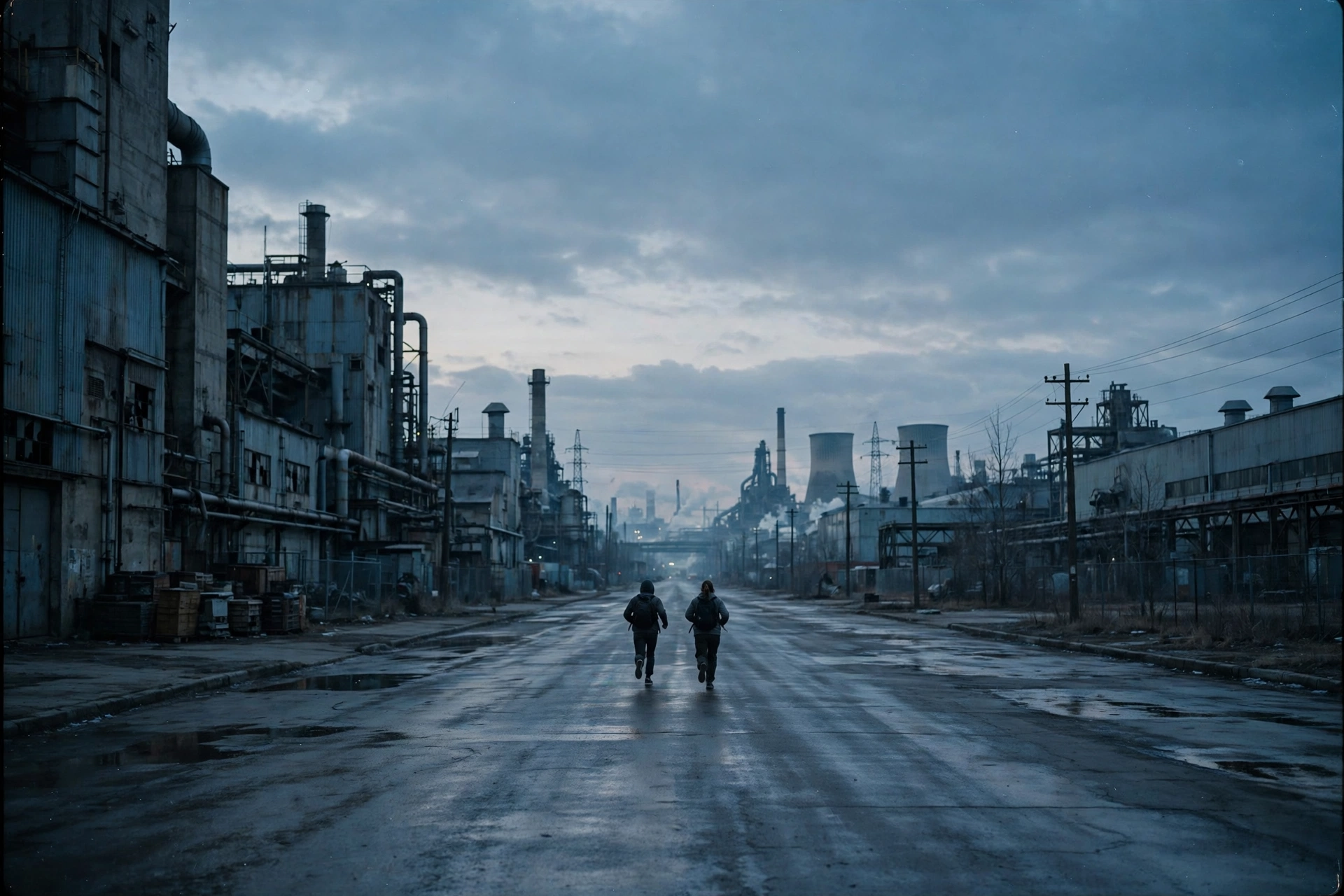
A chase gets its feel from two things: the route and the speed. The formula is full → medium tracking → close-up → full. The full shot draws the start and the end, so the viewer knows how far this run goes. The medium tracking shot keeps the running body moving in one piece. The close-up is saved for the tensest instant — a breath, a look back. The closing full shot confirms whether the person truly left the danger zone. Use it for escaping a warehouse, crossing a street, dodging pursuers, rushing to an exit, or breaking out of a danger area.
The ending runs in reverse: extreme close-up → close-up → medium → full → wide. An ending should not add more information. Its job is to give the emotion an exit. Start from one detail — an eye, a keepsake — then pull back slowly: the person's state, their movement, the whole place. The further the camera pulls away, the smaller the figure gets, and the viewer understands on their own that the story is over. Use it when the task is done, the truth is out, people come together, they leave the scene, or the feeling needs time to settle.
Common mistake: the chase prompt needs one steadying line: tense in speed, but stable and readable on screen — no heavy shaking. The ending is where most people get greedy: one more clue, one more twist, right when the feeling was about to settle — and the mood breaks. An ending does one thing: pull the camera back, let the figure shrink, hold one second, and stop.
At a Glance
8 everyday scenes at a glance
| Scene | Cutting formula | What it solves |
|---|---|---|
| Entering a strange place | Wide → full → medium → close-up → extreme close-up | Sets the place, then leads the eye to the person and the goal |
| Two-person dialogue | Two-shot → A close-up → B close-up → A close-up → B close-up → two-shot | Shows the relationship, the eyelines and the change in feeling |
| Finding a clue | Character close-up → extreme close-up of the key object → full or medium | Never hands the answer over — the viewer puts it together |
| Making a decision | Medium → close-up → extreme close-up | Turns the decision into a visible action |
| Solo search and suspense | Full → medium → extreme close-up → close-up | Space and suspense on one line |
| Action fight | Full → medium → close-up → extreme close-up → full | Fast, but readable; ends by confirming how the fight changed |
| Chase and escape | Full → medium tracking → close-up → full | Keeps the route and speed clear; confirms they truly got out |
| Ending and departure | Extreme close-up → close-up → medium → full → wide | Gives the feeling an exit — the story ends on its own |
FAQ
Frequently asked questions
Does every scene need all five sizes?
No. Five sizes are the full set; a short scene takes two or three. A decision needs only medium → close-up → extreme close-up; a clue needs only character close-up → extreme close-up of the key object → full shot. Pick the formula by what the scene has to solve, not by counting shots.
What if the AI keeps jumping between sizes?
Lock the order in the first line of the prompt, then swap the variables. Add one fixed rule at the end, such as five shots only, or no cutting between shots. Order, variables and fixed rules, written in three layers, cut the jumping down a lot.
Why does a dialogue scene return to the two-shot at both ends?
The opening two-shot sets the relationship: the distance, the positions, who holds the upper hand. The closing two-shot shows whether it changed. A harder standoff, a step closer, or one person blocking the way — you can only see it once both people are back in frame together.
The Core
The core: shot size is the director's punctuation
Decide what the scene must tell the viewer and make them feel, then pick the cutting order. Lock the order, leave the variables open, and write what must not change as its own fixed rule. AI can execute. It can't direct for you.
Shot size and camera movement are two halves of one director's language: movement decides how the camera travels, size decides how far it stands and where it cuts. The camera-movement piece covered 4 moves; this one gives the cutting formulas for 8 scenes. Next is blocking: where people stand in frame, where they face, and how they move.
If you're making an AI short drama or an AI commercial, shot size is one piece of the job. From breaking down the brief and storyboarding to continuity and multi-version delivery, every step needs a director's eye. To talk about your film, add WeChat newwork88 or email 690076050@qq.com.
Camera moves: cinematic moves with AI → Drama services → Commercial film services → Multi-version services →
Have a project in mind? Let's talk first.
On the brief page, we can start with the type of film, scope, timeline and delivery — get clear first, then start production.