08Article · AI Short Drama Angles
Camera Angles in AI Short Drama: 3 Questions First
Angles aren't about how high the camera sits — they're about the emotion you want first. Three entrances, five emotion angles, three environment angles, plus the VIDEO, 180-degree and 30-degree rules — pick from those and you're set.
01 / Entrances
Entrances: the moment a character appears, the tone is set
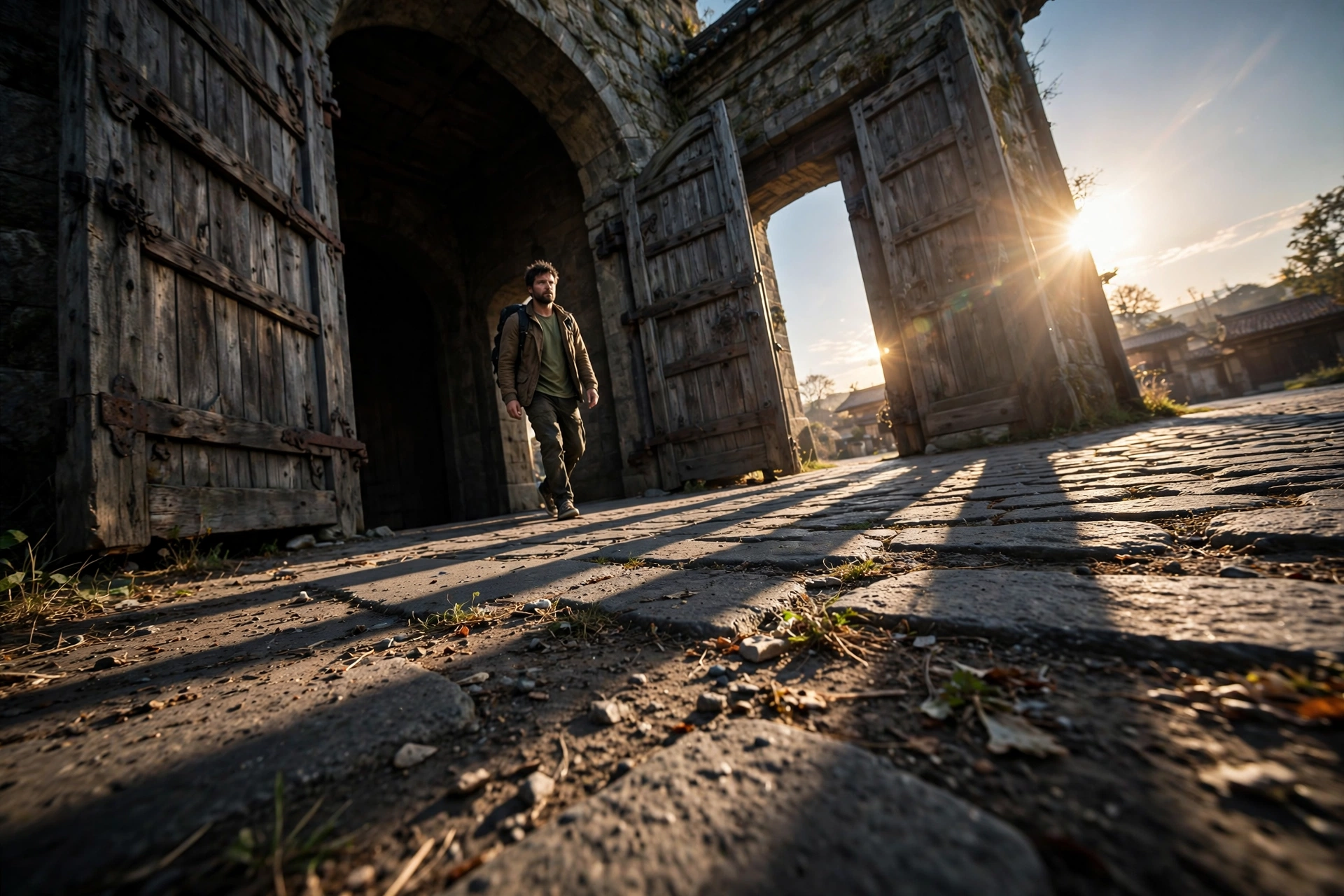
The first time a character appears on screen, the audience has already judged them. There are only three kinds of entrance angles — pick the wrong one and the rest of the scene has to undo that first impression.
The heroic entrance: a low angle looking up, plus a touch of slow motion. The character steps out from behind a door while the camera stays near the ground, sunlight stretching their shadow long — authority lands without a single line of dialogue. The danger is overuse: if every entrance is a low angle, everyone looks heroic, which means nobody does.
The mysterious entrance: hide the character in shadow. Show only a pair of eyes, or keep them facing away so the face never appears. The audience keeps watching precisely because they can't see clearly. Mystery isn't total darkness, though: leave one lamp, one edge of light — hiding and revealing have to happen together, or all that's left is black.
The storybook entrance: the character stands with their back to camera, turns, and the camera drifts slowly from behind to the side, catching the hint of a smile. Old train stations, castle gates and church steps all take this treatment: steam, bells and stained glass are atmosphere, not the lead — don't let them steal the scene from the person.
How to write the prompt: put the emotion before the camera position, for example "majestic, low-angle shot looking up, character walks out of a great door, slow motion." Lead with the feeling, lock the angle down, and don't write empty phrases like "an interesting angle."
Common pitfall: the entrance angle fights the character's identity. Give a mysterious character a heroic low angle and the audience picks the wrong side in the first second — no amount of later scenes fixes that cleanly.
02 / Dialogue and Emotion
Dialogue and emotion: the angle is what the character is thinking
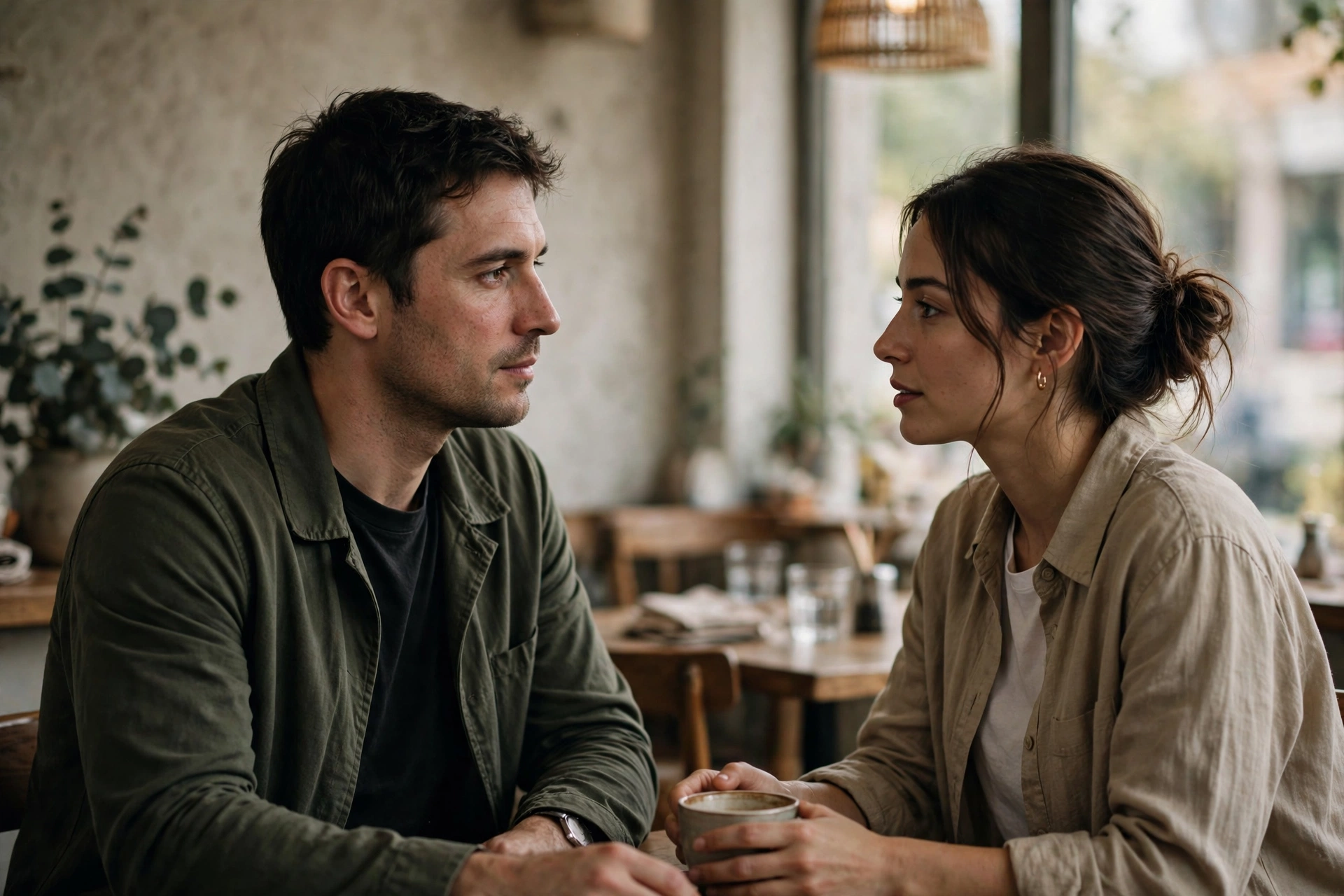
In dialogue, the angle carries the relationship; in an emotional beat, it carries what's going on inside. Change the camera position and the same line means something completely different.
Two-shot, medium: eye level, each person taking half the frame, background softly out of focus — warm and natural. This is the default for everyday conversation: the audience reads at a glance that this is a talk between equals.
Over-the-shoulder reverse: shoot one person from behind the other's shoulder, around 45 degrees, camera locked off. Whoever is in the foreground and whoever is behind it — that's where the power sits; cut back the other way and the power switches sides.
High angle: shoot down from above and the person looks small, helpless, pressed down on. Play the same scene eye level first, then high angle, and the drop itself is the story: a moment ago they were equals, and now one of them is half a head shorter.
From behind: no face, just a back — lonely and resolute. A back in a snowy field or beside a wreck leaves more suspense than a face: when the audience can't see the face, they start imagining it themselves.
Dutch angle: tilt the frame and the walls and floor all turn into irregular lines — tension, confusion and unease arrive on their own. A Dutch angle is seasoning, not the main course: tilt the whole scene and the audience gets dizzy first, and the feeling is gone.
Profile close-up: the curve of a cheekbone plus light and shadow — calm, thought, pressure held in. In the scene by the rain-streaked window, the profile holds more feeling than the front ever could: tears sitting at the corner of the eye, no crying needed.
Extreme close-up: lock onto the eyes, the tremble of a lip — this is where emotional outbursts and breakdowns live. Save it for the peak of the feeling: use it too early and there's nothing left to push toward; use it right and one second does the work of ten lines.
How to write the prompt: lead with the emotion word, for example "oppressive, high angle." One shot, one emotion — don't get greedy. And the emotion and the angle have to match: if you wrote "lonely," the camera should be behind the character or high above, not a high angle over a busy background.
03 / Environment and Action
Environment and action: move the camera and the world gets bigger
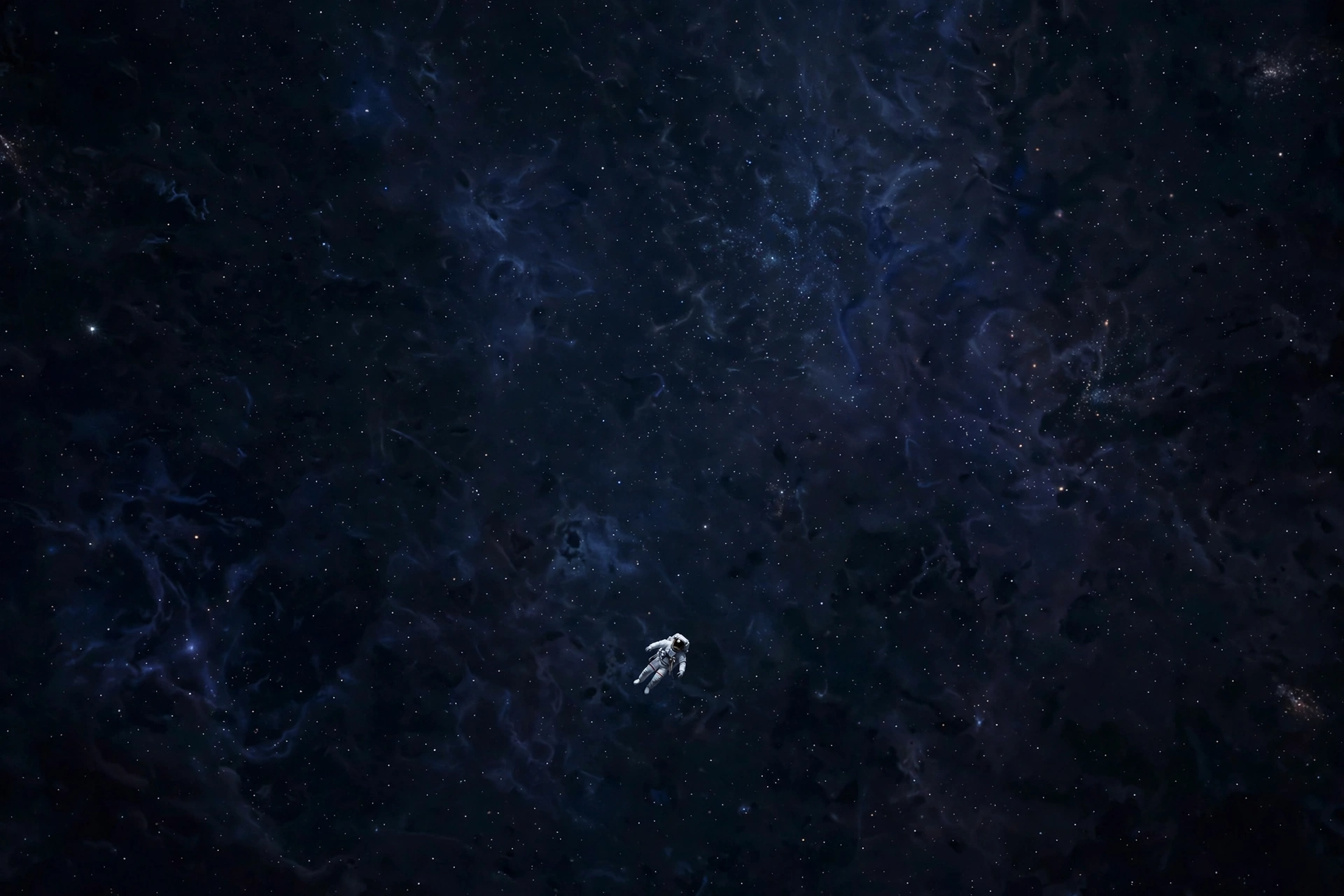
Angles on people carry emotion; angles on the environment carry scale. Lift the camera high or press it to the ground and the same world looks like two different worlds.
Bird's-eye / aerial: look down from high above and a person shrinks to a dot — scale and pressure land in one move. An astronaut drifting in space, the air above a negotiation table, a little girl on the grass: all of them use the small against the vast, and the bigger the world, the lonelier the person.
POV / FPV: first person — the audience is the person in the shot. Parkour, racing through streets and tunnels: the sense of speed comes entirely from being inside it. When the camera shakes, the viewer's heart shakes with it.
Worm's-eye: camera pressed to the ground, looking up — the figure and the object suddenly loom large. Looking up out of a shopping bag, circling low inside a space capsule: both use the low to make things large. Stand low to see big.
Action and conflict: a ground-level view plus handheld, following, and a fast push-in or pull-back gives you speed and tension — alley chases and high-speed pursuits run on this. A hip-height view plus a back shot and an upward orbit makes two people facing off feel like the air itself is tight.
How to write the prompt: for environment angles, state how big the person is in the frame before the camera position. A bird's-eye needs "the figure is tiny"; a worm's-eye needs "camera close to the ground, looking up." Skip the scale and the model defaults back to an eye-level medium shot.
Common pitfall: using an environment angle where the scene doesn't need scale. Cut to a bird's-eye in the middle of a quiet conversation and the feeling evaporates: the audience was about to listen to two people talk, and the camera turned them into two dots first.
04 / Three Rules
Three rules: VIDEO, 180 degrees, 30 degrees
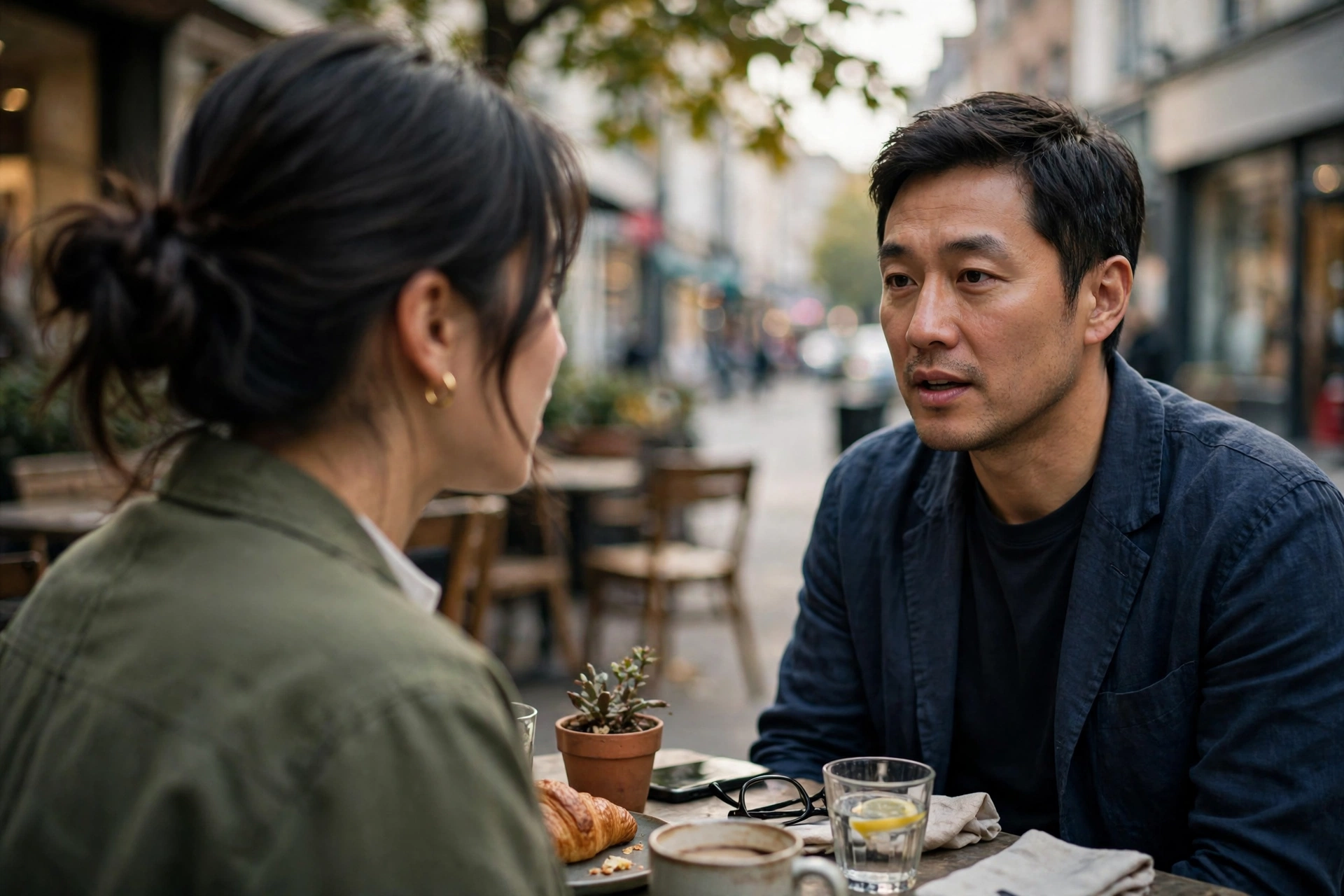
Get the angles right and you still need rules to hold them together — otherwise every shot looks fine on its own and the edit is full of problems.
The VIDEO rule: run through five letters before writing a prompt. V is Visuals: what's in the frame, who's doing what, where. I is Intent: what story is this shot telling. D is Details: light, colour, costume, props. E is Emotion: how the character feels, what mood the frame carries. O is Operation: how the camera moves — push in, pull back, orbit, follow. Think through all five first and the prompt comes out short on its own; write without thinking and the longer it gets, the messier it is.
The 180-degree rule: when two people talk, there's an imaginary axis between them — keep the camera on the same side of it for shot and reverse shot. Cross the line and the audience feels the two people swap left and right, and the space falls apart. If you really need to cross it, say so with a single continuous orbiting take: the camera keeps moving and crosses the axis in one move. Move the camera to a new setup and you have to establish a new axis.
The 30-degree rule: two neighbouring shots need a camera-angle change of more than 30 degrees to cut cleanly. Front to a 45-degree side view is a normal cut; front to a 15-degree side view looks like the picture stuck, like a skipped frame — the audience feels something is off without knowing why.
How to write the prompt: write one camera move only — push in and orbit in the same line and the model will only do one of them. Skip negative words: "don't" and "no" can come out backwards. For a single continuous take, say so plainly, or the model will read it as several cuts. Keep prompts in short sentences and keywords, never a long essay.
Put it together: take two people facing off. Start with intent: a standoff, tension. Then the angle: hip height, from behind, orbiting upward. One line for each of the five VIDEO items: the frame holds two people on open ground; the intent is a standoff; the details are dusk and dust; the emotion is tension; the move is one slow upward orbit. 180 degrees: the camera stays on the same side of the axis. 30 degrees: when you cut to the close-up, turn 45 degrees, not 15. All five items and both rules check out — then roll camera.
At a Glance
Angles at a glance: camera position and feeling in one view
| Angle | What it looks like | When to use it |
|---|---|---|
| Heroic low angle | Looking up from below, the figure looms large and commanding | Entrances, establishing authority |
| Mysterious entrance | Hidden in shadow, only eyes or a back visible | Suspense, character entrances |
| Storybook entrance | Back to camera, turning around to a side view | Memory, character entrances |
| Two-shot, medium | Eye level, each person taking half the frame | Everyday dialogue |
| Over-the-shoulder | Shot from behind one person's shoulder | Dialogue, shifting power |
| High angle | From above, the person looks small and helpless | Pressure, a fall from grace |
| From behind | No face, just a back | Loneliness, suspense |
| Dutch angle | Frame tilted, lines irregular | Tension, unease |
| Extreme close-up | Locked on eyes and the tremble of lips | Outbursts, breakdowns |
| Bird's-eye / worm's-eye | One makes the small stand against the vast, the other makes the low look large | Scale, environment, mass |
FAQ
Frequently asked questions
Are angles and camera moves the same thing?
No. A camera move is how the lens travels: push in, pull back, orbit, follow. An angle is where the camera sits and where it looks: low angle, high angle, from behind, Dutch. The same orbit feels completely different shot from below versus from above. Set the angle first, then the move — not the other way around.
What's the difference between a high angle and a bird's-eye view?
A high angle is an angle on a person: the camera sits just above the character's head, the person still fills the frame, and the point is pressure and smallness. A bird's-eye is a height on the environment: the person is a dot in the frame and the point is scale and scope. One handles emotion, the other handles the world.
I wrote the angle in the prompt and the model still gives me eye level. What now?
Check three things: is the emotion word first; is the camera position locked down — "low-angle shot looking up" works, "an interesting angle" doesn't; and did you ask for two moves at once, so the model only did one of them. If that still fails, pull the angle out into its own sentence and put it first in the prompt.
The Core
The core: ask these 3 questions before picking an angle
Three questions first: what emotion does this scene need? Who is in charge here? Does the frame need to feel big or close? Once the emotion is set, the angle picks itself; once the angle is set, the five VIDEO items, the 180-degree rule and the 30-degree rule just keep you on that road.
Shot size, blocking and angles are three parts of one director's language: shot size decides how far the camera is and where it cuts, blocking decides where people face, stand and move, and angles decide where the camera looks and where the feeling goes. Together, the three give an AI short drama a director's touch. Next up is rhythm: information divided by time, and how to lay it out without dragging.
If you're making an AI short drama or an AI commercial, angles are only one part of it. From breaking down the brief to storyboards, continuity and multi-version delivery, there's a director's call at every step. To talk about how your film gets made, add WeChat newwork88 or email 690076050@qq.com.
Shot sizes: how to cut AI short drama shots → Blocking: character blocking in AI short drama → Moves: cinematic camera moves with AI → Drama services →
Have a project in mind? Let's talk first.
On the brief page, we can start with the type of film, scope, timeline and delivery — get clear first, then start production.